Thursday, 8 September 2011

Corruption scandal plunges Kuwait into deep crisis


The wealthy Gulf state of Kuwait appeared headed Thursday for a major political crisis over allegations of corruption involving several members of Parliament and former ministers. Media reported that a number of banks planned to refer as many as 15 MPs and possibly former ministers to the public prosecution to investigate "suspicious" huge cash deposits into their accounts. Citing informed sources, Al-Rai daily said local banks are likely to refer between 15-20 MPs in the 50-member parliament to public prosecution to probe money-laundering suspicions. It said a number of former ministers could be involved in the scam. State Minister for Cabinet Affairs Ali al-Rashed denied late Wednesday reports that incumbent ministers were involved in the alleged scandal. The government has instructed the central bank and the finance ministry to "take all necessary legal measures" to deal with the allegations. The scandal, as opposition MPs describe it, was exposed by Al-Qabas newspaper in an unsourced report two weeks ago that cash funds totaling 25 million dinars ($92 million/65.4 million euros) had been deposited into the accounts of two MPs. The report claimed the deposits were linked to domestic political events including grillings, indicating that the deposits were used to buy the support of the lawmakers in crucial voting in parliament. Independent Shiite MP Hassan Jowhar expected the issue to develop into a major political crisis that will lead to dissolving parliament and calling for snap polls, the fourth since May 2006. Youth activists campaigning to oust Prime Minister Sheikh Nasser Mohammad al-Ahmad Al-Sabah, a senior member of the ruling family, plan to stage a new rally on September 16 and the corruption charges could energize them. Kuwaiti opposition MPs demanded recalling parliament from summer recess for an emergency session on September 22 to review government measures on the allegations and debate and pass a number of anti-corruption laws.

Shameful phone hacking scandal forces change inside the Murdoch bunker


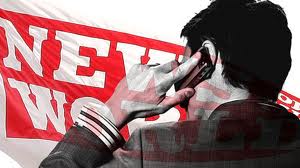
A community with a voracious appetite for scandal, it does appear we are experiencing Murdoch news fatigue. Like frogs in boiling water, we are losing sensitivity to the barrage of sensational News Corp instalments flowing from the phone hacking affair. On Tuesday, two former News International managers - head of legal affairs Tom Crone and News of the World editor Colin Myler - told a British parliamentary committee that James Murdoch had been made aware of widespread phone hacking despite his written statement to the contrary. The testimony was another milestone in the series of explosive revelations of systemic criminal phone hacking which had been going on for years but allegedly covered up by a corporate and police conspiracy. Advertisement: Story continues below Since the hacking affair was blown open, there has been a myriad of developments from the company, government and police - many of them astonishing. Much of this is highly significant to the Murdoch empire, and the ramifications have been difficult to digest. This shameful episode has changed the News Corp organisation and Rupert Murdoch's management style. In a corporate sense, the decision by Murdoch to undertake a $US5 billion ($4.7 billion) share buyback is, on its own, momentous. Aggressive expansion of the News Corp empire has been a hallmark of Murdoch's modus operandi. The decision to undertake a capital management program that allocated cash to shareholders rather than to acquisitions marks a major departure. The focus of News Corp's strategy in the past has been on raising funds and using available cash to expand, and avoiding the dilution of Murdoch family control. This was never more evident than in the creation of News Corp non-voting stock and the move to domicile the company in the lax regulatory jurisdiction of Delaware. The only other incidence of Rupert Murdoch bowing to outside pressure was in the early 1990s, when the Pittsburgh Bank famously forced News Corp to the brink of bankruptcy by threatening to block the rollover to a new debt package. News Corp has otherwise been run by Rupert Murdoch and in his way. The notion of appeasing minority shareholders is new to Murdoch, as is divorcing the hard-wired nepotism.

Amelia Hill was questioned under caution by police in an inquiry into alleged leaks of information from Operation Weeting

amelia-hill-guardian-police
. Photograph: Katherine Rose

The National Union of Journalists and a respected media watchdog have criticised the questioning of a Guardian journalist in an inquiry into alleged leaks of information from Operation Weeting, the investigation into phone hacking at the News of the World.

It emerged on Wednesday that Amelia Hill, a reporter involved in a number of the Guardian's key phone-hacking revelations over recent weeks, was questioned under caution several days ago in a case that raises concerns about attempts to criminalise contact between journalists and off-the-record sources.

Last month a 51-year-old detective constable was arrested in connection with alleged leaks from the Scotland Yard phone-hacking investigation. At the time there were reports that the officer had passed information to the Guardian, but the newspaper said it had "no comment to make on the sources of our journalism".

Michelle Stanistreet, the general secretary of the National Union of Journalists, said that there was "a vital journalistic principle at stake here" and that "it is outrageous that an allegation of off-the-record briefings is being treated as a criminal matter".

She added: "There is a clear distinction between legitimate off-the-record interviews and the illegitimate payment of bribes."

Martin Moore, the director of the media watchdog the Media Standards Trust, said that in the light of the phone-hacking scandal it was becoming "increasingly important to sustain and defend journalism in the public interest". He said that it was "not the time to be threatening public interest journalism" by the police moving to question reporters such as Hill.

The Guardian said in a statement: "We can confirm Amelia Hill has been questioned in connection with an investigation into alleged leaks." The newspaper argued that the case could have lasting repercussions for the way journalists deal with police officers. The statement added: "On a broader point, journalists would no doubt be concerned if the police sought to criminalise conversations between off-record sources and reporters."

Although the paper said it would not comment on any specific confidential source, a spokesman said Hill had never paid a police officer for information.

The police investigation into leaks from Operation Weeting has been going on for several weeks.

Meanwhile, Raoul Simons, 35, the deputy football editor of the Times, became the 16th person to be arrested as part of the phone hacking enquiry.

Simons, who had joined the Times from the Evening Standard in August 2009, is understood to have been arrested at 5.55am on suspicion of conspiring to intercept communications. He was released on police bail until a date in October.

He was not arrested by prior appointment. He was taken to a north London police station and questioned on suspicion of conspiracy to intercept voicemail messages, contrary to Section 1 (1) of the Criminal Law Act 1977.

Hill's police interview comes amid growing pressure to clamp down on contacts between officers and journalists following the News of the World phone hacking scandal, which has spread out into wider allegations of police corruption.

Emails from News International allegedly imply that journalists on the now closed Sunday tabloid bought copies of Buckingham Palace's private phone directory from a royal protection officer.

Following those revelations, an inquiry by Her Majesty's Inspectorate of Constabulary is examining "alleged corruption and abuse of power" in police relationships with the media, and Elizabeth Filkin, the former parliamentary commissioner for standards, heads a group drawing up a framework for how police officers handle their relationships with reporters. Both inquiries are considering whether communication between police officers should be officially monitored and recorded by a press officer.

The questioning of Hill has similarities to a case police mounted against Sally Murrer, a reporter on the Milton Keynes Citizen, and a former Thames Valley police detective, Mark Kearney, which was thrown out. Kearney had been accused of leaking information to Murrer. The collapse of the case was widely seen as a victory for journalistic freedom.

It was reported meanwhile that Andy Coulson, the former editor of the News of the World and the prime minister's former personal communications director, is refusing to appear before a Commons select committee that is investigating phone-hacking.

His solicitors have written to the culture, media and sport committee declining an invitation to appear, citing "concerns" about "parallel inquiries and investigations and the publicity generated by them".

He has consistently denied knowing that phone hacking took place but last month a previously unseen letter from Goodman emerged that claimed phone hacking was "widely discussed" at editorial conferences until Coulson banned mentions of it. Goodman's letter also claimed that Coulson had offered to let him keep his job if he agreed not to implicate the paper in hacking when it came to court.

Coulson resigned from the News International paper in 2007 after its former royal editor Clive Goodman was jailed on phone-hacking offences.

It also emerged yesterday that MPs on another committee have been told that News International asked a technology firm, HCL, to delete emails and other documents 13 times since 2009.

Technology company HCL, which provides services under contract to News International, informed the Commons home affairs committee in August that it was aware of the deletion of hundreds of thousands of emails on nine occasions between April 2010 and July 2011, but said it did not know of anything "untoward" behind the requests. Yesterday, HCL's solicitor, Stuart Benson, contacted the committee again to say that a further four requests had come to light - one of which related to the deletion of emails from an inbox of a user who had not accessed his account for eight years.

Wednesday, 7 September 2011

Phone hacking: Police bail sports writer Raoul Simons


Police bail sports writer Raoul Simons A total of 16 people have now been arrested as part of the investigation into phone hacking Continue reading the main story Phone-hacking scandal Q&A: Phone-hacking scandal Key people and profiles Timeline Inquiries and legal challenges A 35-year-old man held by officers probing phone hacking at the News of the World has been bailed, police say. The BBC understands he is sports journalist Raoul Simons who used to work at London's Evening Standard before moving to the Times in 2009. The man was bailed on suspicion of conspiracy to intercept voicemails. Meanwhile, Guardian reporter Amelia Hill has been questioned under caution over alleged police leaks surrounding the hacking inquiry, the paper said. It followed the arrest of a Met Police detective constable last month who worked in the Operation Weeting team. Scotland Yard says the "investigation continues" and they are not giving a "running commentary" on events. Mr Simons was appointed deputy football editor at the Times in August 2009, having previously worked at the Evening Standard. In September 2010, he went on extended leave after material allegedly linking him to phone hacking emerged. He is still on the payroll but has not returned to work since. It is understood he has not been involved in any inappropriate behaviour while at the Times. The man has been bailed by police to a date in October pending further inquiries. A total of 16 people have now been arrested on suspicion of phone hacking - 15 of whom are still under investigation - since Operation Weeting was launched in January. Scotland Yard's fresh investigation was set up to examine the illegal interception of voicemails. Former News International chief executive Rebekah Brooks and ex-Downing Street communications chief Andy Coulson are among those who have already been arrested as part of the inquiry. The scandal has led Met Police Commissioner Sir Paul Stephenson and Assistant Commissioner John Yates to resign, and the News of the World to close down after 168 years.

Starting today, companies and celebrities will have a 50-day "sunrise" period allowing them to officially register under the .xxx domain and put down bids to set up shop in the Internet's red-light district.

 (Lance Whitney/CNET)

(CBS News)  

Starting today, companies and celebrities will have a 50-day "sunrise" period allowing them to officially register under the .xxx domain and put down bids to set up shop in the Internet's red-light district.


The new .xxx top-level domain is open not just to porn sites but to nonporn sites that want to block the use of their names on the .xxx domain. Florida-based ICM Registry, which is administering the launch, will work with 50 individual registrars around the world to handle the actual registrations. After the expiration of the sunrise period, a 17 day "land rush" period will open, allowing adult sites to register for whatever .xxxx addresses are still available. After that, applications will be reviewed individually on a first come basis.

Tuesday, 6 September 2011

Colin McRae blamed for fatal helicopter crash


Rally car champion Colin McRae has been blamed for causing the helicopter crash in which he died along with his five-year-old son and two family friends. A fatal accident inquiry found the crash, near his family home in Lanark in 2007, happened because he carried out unnecessary low-level manoeuvres. It also found that Mr McRae's flying was "imprudent" and "unreasonable". In a statement, the McRae family said they "still believe we will never know what caused the crash". No permission Mr McRae, 39, his five-year-old son Johnny, the boy's six-year-old friend Ben Porcelli and Graeme Duncan, 37, all died when the aircraft came down near the McRae family home in Lanark on 15 September 2007 as they flew home from a trip to see a friend. Continue reading the main story “ Start Quote Low-level flying in such difficult terrain, was imprudent, unreasonable and contrary to the principles of good airmanship” Sheriff Nikola Stewart The inquiry had heard from Karen and Mark Porcelli, the parents of Ben, who said they did not give Mr McRae permission to take their son in the helicopter. Sheriff Nikola Stewart, who heard the inquiry over 16 days at Lanark Sheriff Court, concluded that the deaths could have been avoided if Mr McRae had not engaged in low-level flying "when it was unnecessary and unsafe to do so". In her written determination, the sheriff concluded: "The deaths and the accident resulting in the deaths might have been avoided had Mr McRae not flown his helicopter into the Mouse Valley. "Such a precaution would have been entirely reasonable. There was no necessity to enter the Mouse Valley. There were no operational or logistical reasons to enter the Mouse Valley. "Mr McRae chose to fly the helicopter into the valley. For a private pilot such as Mr McRae, lacking the necessary training, experience or requirement to do so, embarking upon such demanding, low-level flying in such difficult terrain, was imprudent, unreasonable and contrary to the principles of good airmanship." The helicopter crashed near Mr McRae's home in September 2007 The ruling states that the accident happened when, due to an "unknown occurrence", the aircraft deviated from its intended flight path and crashed into trees lining the side of Mouse Valley. The aircraft was in powered flight at the time of the crash and Mr McRae had attempted to recover from that unknown incident. These attempts, the sheriff said, were unsuccessful because of the position and speed of the helicopter within Mouse Valley and the ensuing restrictions on opportunities to land the helicopter or fly it to safety. Such options would have been available to him had he "adhered to rules of good airmanship and desisted from flying in the valley at low height and high speed", she said. 'Unsafe' flying The sheriff stated: "It would have been a reasonable precaution to refrain from flying helicopter G-CBHL into Mouse Valley wherein the pilot engaged in low-level flying when it was unnecessary and unsafe for him to do so, and whilst carrying passengers on board." As part of the hearing, the sheriff and lawyers involved in the case visited the woods where the Eurocopter Squirrel aircraft crashed. Continue reading the main story “ Start Quote We still believe we will never know what caused the crash” Jimmy McRae Colin McRae's father One of the crash victims, Mr Duncan, filmed much of the outbound and return flights on his personal camcorder and some of the footage was recovered and included in the inquiry hearings. Sheriff Stewart said the footage indicated that the helicopter was being flown "at unnecessarily low heights". "He (Mr McRae) undertook significant manoeuvring at low level and the helicopter seems to have encountered significant g-loading as a result, to the evident enjoyment of his passengers. "The episodes of extremely low-level flying and the excessive manoeuvre parameters, particularly the descent into the valley by Larkhall, all as captured on the video recording, are indicative of an aircraft being flown imprudently, without due regard to the principles of good airmanship and in such a way that normal safety margins would be reduced." To fly an aircraft in the UK, it is necessary to hold a pilot's licence and a valid medical certificate, and to have the licence validated with the type of aircraft to be flown. Sheriff Stewart found that Mr McRae did not hold a valid flying licence or a valid "rating" for the Eurocopter Squirrel helicopter. Continue reading the main story Inquiry timeline The FAI took place at Lanark Sheriff Court Evidence was heard over 12 days between 12 January and 26 May, 2011 An inspection of the site took place and points along the flight path were visited on January, 2011 Final submissions heard on 8 August, 2011 Fatal Accident Inquiry conclusions were published on 6 September "He was, accordingly, in breach of article 26 of the Air Navigation Order 2005 when he flew his helicopter on September 15 2007 and should not have flown that machine at that time," she said. The sheriff's findings go further than an Air Accidents Investigation Branch (AAIB) report, published in February 2009, which found no cause could be positively determined into the tragedy. In a statement, Mr McRae's family said they still believed the cause of the crash could not be determined. His father, Jimmy McRae, said: "We still believe we will never know what caused the crash but we were never in any doubt as to Colin's prowess as a fine pilot. "Everybody knows from Colin's rallying career that safety is always an issue and that his reactions and eye and hand co-ordination were world-class." He said his family had wanted the inquiry to recommend that private aircrafts should be fitted with a flight data recorder. He said: "Had a flight recorder been fitted to the aircraft, it may have been possible to determine what occurred in the final seconds of the flight and what actually caused the helicopter to crash. "This would prevent uncertainty as to the cause of the crash and allow lessons to be learned from tragic accidents such as this." Mr McRae said he hoped the family would be able to "move forward" following the findings. The McRae family's solicitor, Peter Watson, added: "Although Colin's licence was out-of-date, this played no contributory factor whatsoever to the accident.

Former executives challenge Murdochs' testimony


Jonathan Chapman, the former director of legal affairs with News International, said Rupert Murdoch wasn't being accurate when he told Parliament that he blamed the London law firm Harbottle & Lewis for failing to uncover the scope of the hacking scandal back in 2007. News International is the British arm of Murdoch's global News Corp. media empire. "I don't think Mr. Murdoch had his facts right," Chapman told lawmakers. "He was wrong." Chapman was one of four executives fielding questions from Parliament's media committee about what they knew and when — and all have already cast doubt on key aspects of the testimony given by the Murdoch family earlier this summer. The hacking scandal has decimated Murdoch's British newspaper arm, leading to the closure of its top-selling Sunday tabloid, News of the World, and the arrests of more than a dozen journalists. It's also rocked the top levels of Britain's political and police elite. Andy Coulson, a former News of the World editor and until recently one of Prime Minister David Cameron's top aides, has resigned — as have the two top officers with Scotland Yard. Coulson was one of 15 people arrested. Media committee chairman John Whittingdale says the latest hearing aims to uncover the truth about a critical piece of evidence, unearthed in 2008, suggesting that voicemail interception at the News of the World was far more widespread than the tabloid claimed at the time. Questions about who saw the evidence are critical to establishing whether there was an attempt to cover up the scale of illegal behavior at the now-defunct tabloid. The News of the World stands accused of spying on a host of politicians, celebrities, top athletes, crime victims and even terrorism survivors by systematically intercepting voicemail messages in an effort to get scoops. Allegations of computer hacking and police bribery are also being investigated by Scotland Yard. The evidence in question was an email carrying the transcript of an illegally intercepted conversation and marked "for Neville" — an apparent reference to the News of the World's chief reporter, Neville Thurlbeck. Because it apparently implicates others in the hacking, the email has the potential to undermine News International's fiercely held contention that one reporter alone, Clive Goodman, had engaged in phone hacking. If Rupert Murdoch's son James knew about the email — and was aware of its implication — it would lend weight to the suggestion that he had approved a massive payoff to one employee in an effort to bury the scandal. James Murdoch has said earlier that he was not aware of the email at the time, but former News International legal adviser Tom Crone and Colin Myler, a former editor at News of the World, contradicted him in Tuesday's testimony. "I told him about the document," Crone insisted, adding there could be no doubt that "this document meant that News of the World had a wider problem and that we had to get out of it." Daniel Cloke, News International's former personnel director, also contradicted James Murdoch's contention that he and Chapman had approved the massive compensation awarded to Goodman, the disgraced reporter. One lawmaker has alleged that payment was made to buy Goodman's silence about the scale of phone hacking at the paper. Cloke and Chapman said it was Murdoch's right-hand man, Les Hinton, who signed off on the quarter million pound payout. Hinton, the publisher of The Wall Street Journal, was the most senior Murdoch executive to resign in the hacking scandal.

The new Libya won't trust Britain so easily now | News


The documents revealing the cosy relationship between top British and Libyan intelligence officials are embarrassing not just because they confirm Britain's rendition of Islamist terror suspects, including Abdel Hakim Belhadj, the Transitional National Council's new security commander in Tripoli, but also because they lend credence to Britain's reputation as a slippery operator in the Middle East. David Cameron's support for the TNC was meant to gain souk cred by tying Britain's banner to the spirit of the Arab Spring. Cameron has said the new documents should be examined by the independent Detainee Inquiry, chaired by Sir Peter Gibson. They show how keen Tony Blair was to bring Gaddafi into the fold following Saddam Hussein's fall in April 2003 and to trade an end to Libya's pariah status in return for help in the war against terrorism. There was little wrong with that. What is sickening is the extent to which Britain sought to ingratiate itself by delivering up Gaddafi's opponents. No less disturbing is the manner in which Britain's cosying up to Gaddafi has been represented as a mistake by misguided individuals, for which institutions such as the London School of Economics have suffered. Perhaps the most fascinating new document was sent on March 18, 2004 to Musa Kusa, head of Libyan intelligence, by Mark Allen, MI6's director of counter-terrorism, who crowed about Belhadj's rendition while arranging a forthcoming visit by Blair to Libya. A week later Gaddafi welcomed the British PM in his Tripoli tent (as requested by Allen for publicity reasons). It is difficult to say who was the greater showman: the unctuous Blair or Gaddafi joking how his Third Universal Theory, the basis of his Green Book, paved the way for Blair's Third Way politics. Within two months, Allen was pipped as the next MI6 head by John Scarlett, who, two years earlier, as chief of the Joint Intelligence Committee, had backed Blair's argument that Saddam had dangerous weapons of mass destruction. Allen left the SIS shortly afterwards. For Middle East watchers, an interesting outcome has been these glimpses of intelligence machinations in this most secretive of regions. A Le Carré of the al Qaeda conflict will surely follow. It is Cameron who now has to deal with the practical consequences. The ultimate fate of Gaddafi and his family is out of his hands. But Britain has tough decisions to make about other players, including Musa Kusa, who defected from Libya in March, came to Britain, and was last heard of in a Qatar hotel. In 1980 he was expelled from Britain for advocating the murder of Libyan dissidents. For this and his wider role in Libyan terrorism, many powerful voices argue that he should be tried in Britain. But, even at this stage, it may be that he has too much to reveal. More immediately, the Prime Minister needs to assess the role of former Islamists such as Belhadj in the new regime and take appropriate measures. It will not be enough to kick the rendition issue into the long grass by referring it to the Gibson inquiry, which has yet to begin its work. If David Cameron hoped for an easy ride in post-Gaddafi Libya, these papers have disabused him of that notion.

former MP Margaret Moran, who is to face 21 charges in relation to claims she made for parliamentary expenses.

File photo of former MP Margaret Moran
File photo of former MP Margaret Moran, who is to face 21 charges in relation to claims she made for parliamentary expenses. Photograph: Michael Stephens/PA

The former Labour MP who claimed for dry rot treatment on a home more than 100 miles from her constituency will be charged with fiddling her expenses by more than £60,000, prosecutors said today.

Margaret Moran, one of the last politicians investigated over the scandal, will appear before magistrates facing 21 charges relating to her parliamentary claims.

Moran, former MP for Luton South, will appear before City of Westminster magistrates' court on 19 September, the Crown Prosecution Service said.

police have released images of 28 suspects they want to question about serious street disorder that “wreaked havoc” across Northern Ireland

The police have released images of 28 suspects they want to question about serious street disorder that “wreaked havoc” across Northern Ireland.

Detectives from a specialist public order inquiry team are hoping the public will help them identify the men in these images as part of their investigations into rioting in east Belfast and Ballyclare during June and July.

Three people were shot during three nights of sustained sectarian violence at an interface on the Lower Newtownards Road in Belfast in June.

In Ballyclare six officers sustained whiplash when a hijacked bus rammed a police vehicle during riots that erupted after Union and paramilitary flags were removed from lampposts in July.

Assistant Chief Constable Alistair Finlay said the response from the public appeals to date had been “positive”.

A second tranche of photographs will be released on Thursday showing suspects police want to speak to in connection with rioting in north and west Belfast during July.

Last month all of Northern Ireland’s main news organisations wrote to the PSNI Chief Constable to protest at having to hand over riot footage of trouble in east Belfast.

The letter highlighted to Matt Baggott the “genuine fear that terrorists and rioters will target the media whom they perceive to be evidence gatherers for the State” if the PSNI continues to demand the disclosure of material gathered for news purposes.

The PSNI has declined to comment on the source of these latest images.


TV cameras to be allowed into criminal trials


David Cameron is expected to pave the way for the historic move in a long-awaited speech on crime planned for later this month. However, the televised coverage is expected to be limited and will not allow cameras to record witnesses giving evidence as occurs in America. Television cameras are currently banned from most courts in England and Wales although the proceedings of the new Supreme Court - the top court of appeal which replaced the law lords - can be broadcast. Some Scottish court cases are also televised, including proceedings involving Abdelbaset al-Megrahi, the Lockerbie bomber. The decision to allow limited broadcasting in other criminal cases is set to spark debate.

Monday, 5 September 2011

Libya rendition claims: David Cameron calls for inquiry


Allegations that MI6 was involved in the rendition of Libyan terror suspects should be examined by an independent inquiry, David Cameron has said. It comes after papers suggesting close ties between MI6, the CIA and the Gaddafi regime were found in Tripoli. An anti-Gaddafi military leader says he wants the UK and US to apologise for organising his 2004 transfer to Libya. An existing inquiry into allegations of UK security agencies' involvement in torture has said it will investigate. Abdel Hakim Belhaj, then a terror suspect but now in charge of the Libyan capital's military forces, says he was tortured after being arrested in Bangkok. He says he was taken to Libya by a CIA and MI6 operation, allegedly confirmed by documents sent to Gaddafi's regime, and sent to prison. The Foreign Office said the government had a "long-standing policy" not to comment on intelligence matters. Mr Belhaj told the BBC: "What happened to me and my family is illegal. It deserves an apology. And for what happened to me when I was captured and tortured. "For all these illegal things, starting with the information given to Libyan security, the interrogation in Bangkok." According to the Guardian, these documents were discovered in an abandoned office building in Tripoli by staff from Human Rights Watch. Mr Belhaj said that MI6 and the CIA did not witness his torture at the hands of the former Libyan regime, but did interview him afterwards. A spokesman for the prime minister said that the existing Detainee Inquiry into rendition was "well placed" to investigate the allegations reported in recent days. "It's not clear precisely what the allegations amount to," the spokesman added. "We don't have a clear picture from these documents, which is precisely why an inquiry like the [Detainee] inquiry might be well placed to consider the issue." A statement from the Detainee Inquiry, to be chaired by Sir Peter Gibson, said that as part of its role of examining the extent of the government's involvement in, or awareness of, improper treatment of detainees, it would "therefore, of course, be considering these allegations of UK involvement in rendition to Libya as part of our work. "We will be seeking more information from government and its agencies as soon as possible."

Blair was 'godfather to Murdoch's daughter'


Former prime minister Tony Blair is godfather to one of Rupert Murdoch's young children, sources said on Monday, raising fresh questions about British political links to the media mogul's empire. The revelation first emerged in a Vogue magazine interview with Murdoch's wife Wendi Deng, which also contains claims that Blair was present when Murdoch and Deng's two daughters were baptised beside the River Jordan in March last year. A spokesman for Blair's London office and a spokeswoman for Murdoch's US-based News Corporation both refused to comment on the story in Vogue's October UK edition, which is due out on Thursday. But sources close to News Corp confirmed to AFP that Blair was godfather to Grace, aged nine, Murdoch's eldest daughter by third wife Wendi. A source close to Blair also confirmed the Vogue story was true. News of the link between former Labour premier Blair and Australian-born Murdoch comes two months after the tycoon was forced to close down his News of the World tabloid amid a scandal over phone-hacking. The Vogue article, extracts of which were published in the Daily Telegraph on Monday, says Blair attended the ceremony "garbed in white" and describes him as one of Wendi Murdoch's "closest friends". Hollywood stars Nicole Kidman and Hugh Jackman were named publicly as godparents to Murdoch's young daughters at the time of the ceremony on the banks of the River Jordan, but Blair did not feature in photographs that were released. Jordan's Queen Rania hosted the baptism of Grace and Chloe, eight, Vogue said. A spokeswoman for Vogue UK confirmed that all the information and extracts published in the Daily Telegraph were accurate. They said it was an exclusive arrangement with the newspaper to release it in that way. The phone-hacking scandal dragged in Prime Minister David Cameron when his former media chief Andy Coulson, an ex-News of the World editor, was arrested in July on suspicion of hacking and bribing police. But it raised wider questions about the British establishment's cosy links with Murdoch, especially as Labour, who are now in opposition, made huge efforts to win over the elderly mogul's stable of newspapers.

Saturday, 3 September 2011

30-year-old man who has been arrested by police investigating the phone-hacking scandal at the News of the World is believed to be Ross Hall

30-year-old man who has been arrested by police investigating the phone-hacking scandal at the News of the World is believed to be Ross Hall, a former journalist at the paper who now works for a financial PR firm.

Hall, who worked under the name Ross Hindley until September 2006, is believed to be the man who transcribed the "for Neville" email that was sent to private investigator Glenn Mulcaire. It has become a pivotal piece of evidence in the phone-hacking affair.

That email contained a transcript of messages left on a mobile phone belonging to Gordon Taylor, the chief executive of the Professional Footballers' Association. The "Neville" referred to in the email is believed to be Neville Thurlbeck, the paper's chief reporter.

There is a dispute among senior executives at News International, which owned the paper until it was closed in July, over who knew about the "Neville" email.

The paper's former editor Colin Myler and its lawyer Tom Crone insist they told News International chairman James Murdoch about the existence of the email in 2008, before the company decided to settle a legal action which Taylor had brought against the paper. But Murdoch denies that he knew about the email.

Taylor received an out-of-court settlement of £700,000, and agreed not to discuss the case.

Hall is the nephew of Phil Hall, who edited the News of the World from 1995 to 2000 and is now a PR consultant.

The Metropolitan police said a 30-year-old man was arrested by appointment on suspicion of conspiracy to intercept voicemail messages and perverting the course of justice at a north London police station on Friday. He was later released on bail until January next year.

TWO BRITISH teenagers, accused of involvement in attacks on major websites, are facing a transatlantic investigation involving Scotland Yard and United States authorities,

TWO BRITISH teenagers, accused of involvement in attacks on major websites, are facing a transatlantic investigation involving Scotland Yard and United States authorities, a London court was told yesterday.

Jake Davis (18) from the Shetland Isles and Ryan Cleary (19) from Wickford in Essex, will appear before Southwark Crown Court in January. But a full trial may not held for months afterwards.

The two have been ordered to stay off the internet, while Mr Davis is under instructions to live with his mother in Lincolnshire. The British police, who have sent officers to the US as part of their inquiries, continue investigating.

Both are charged with offences under the Computer Misuse Act for allegedly conspiring with others in the LulzSec and Anonymous groups of internet hackers to launch “denial of service” attacks that crashed websites run by big firms and organisations.

The victims included the Serious Organised Crime Agency in the UK. Mr Davis is accused of unlawfully gathering data from NHS computers and of being involved in attacks on websites run by News International.

Neither was present for the hearing. But Judge Nicholas Lorraine-Smith said that they would need to appear to enter pleas against the charges when their cases come back before the court on January 27th.

Mr Cleary has been diagnosed with Asperger’s Syndrome since his arrest in June.

Mr Davis, it is understood, was tracked down through log-on details he used while playing playing computer games on Xbox.Police found a laptop running 40 different software programmes simultaneously when they raided his home. He could, if convicted, face up to 10 years in prison.

Both may also become the subject of US extradition requests.

In an interview with a computer magazine, Anonymous said that it would continue its denial of service attacks until it “stops being angry” because of its objections to efforts by corporations to prevent computer piracy.

LulzSec, otherwise known as Lulz Security, has claimed responsibility for a number of hacking attempts on websites in the United States, including the Central Intelligence Agency, the US Senate, Sony and others.

Thursday, 1 September 2011

Australian investigators say gypsy gangs may have expanded their crime operations into drug dealing.


The Daily Telegraph reported in its Tuesday edition the Department of Fair Trading has uncovered alleged ties between gypsy gangs and outlaw motorcycle gangs.

Officials estimate gypsy gang crime, which often includes scams against the elderly, nets more than $30 million year in Australia, the newspaper said. An investigator said the agency has uncovered evidence that some gang members are now involved in drug dealing with the Rebels motorcycle gang.

The agency said it has allocated $1.4 million to help stem the tide of migrant gang crime that surges from September to April.

"They cold call victims and work in pairs. They often pose as utility workers such as Energy Australia, telling the elderly target they are conducting free safety checks," the government report said. "Once they have gained access to the home they say there is a urgent problem needing immediate work. "One of the pair will also engage the victim in conversation and then the other searches the house and steals valuable."

Friday, 26 August 2011

US east coast on hurricane alert

Tropical storm-force winds from Hurricane Irene have begun lashing the US east coast with rain, with the potential to cause billions of dollars in damage
At least 65 million people could be affected along a densely populated arc that includes Washington, Baltimore, Philadelphia, New York and Boston.
A hurricane warning is in effect from North Carolina all the way to Massachusetts - including for New York City, where more than a quarter of a million people have been ordered to evacuate ahead of Irene's approach. It was the first hurricane warning issued for New York City in more than two decades.
Officials declared emergencies, called up hundreds of National Guard troops, shut down public transport systems and begged hundreds of thousands of people to obey evacuation orders. Airlines cancelled more than 2,000 weekend flights.
Speaking from Martha's Vineyard Island where he is on holiday, President Barack Obama said all indications point to the storm being a historic hurricane.
"Don't wait. Don't delay," said Mr Obama, who decided to cut short his summer holiday by a day and return to Washington. "I cannot stress this highly enough: If you are in the projected path of this hurricane, you have to take precautions now."
The latest forecasts showed Irene crashing into the North Carolina coastline, then churning up the Eastern Seaboard and drenching areas from Virginia to New York City before a weakened storm reaches New England.
Rain and tropical storm-force winds of at least 39 mph were already pelting North and South Carolina as Irene trudged north, snapping power lines and flooding streets.
Thousands were without power. In Charleston, South Carolina, several people had to be rescued after a tree fell on their car, trapping them.
In addition to widespread wind and water damage, Irene could also push crude oil prices higher if it disrupts refineries in Delaware, New Jersey, Pennsylvania and Virginia, which produce nearly 8% of US petrol and diesel fuel.


Hundreds, possibly thousands of celebrities have had their names permanently banned from the new .xxx adults-only internet domain.


El Reg can reveal that everyone from Justin Bieber to Piers Morgan has had their .xxx address placed into a permanent "reserved" status by the registry manager, ICM Registry.

This means that cybersquatters or crafty porn webmasters will not be able to register domains such as Beyonce.xxx or BritneySpears.xxx to drive traffic to their sites.

It also means that many celebrities will not have to pay to protect their personal brands in the forthcoming .xxx "sunrise period" or take cybersquatters to court in future.

ICM has not published its list of reserved names, nor will it reveal how long the list is or how it decided which celebrities were worth including.

However, it's possible to reverse-engineer parts of the database using Whois tools provided by ICM and third parties.

The threshold for inclusion appears to be based on fame, rather than sex appeal. While Angelina Jolie and Brad Pitt can rest easy, so can Donald Trump and Verne Troyer.

As a useful guide, the only current member of the Celebrity Big Brother cast on the list appears to be Tara Reid. In the unlikely and frankly terrifying event that somebody cybersquats their .xxx names, Jedward and Kerry Katona will have to lawyer up.

You don't even need to be alive to be included. AmyWinehouse.xxx is blocked, as is Elvis.xxx, MarilynMonroe.xxx, JimiHendrix.xxx and OsamaBinLaden.xxx.

From the world of politics, Barack Obama and David Cameron have both been protected. But while MichelleObama.xxx is also blocked, SamanthaCameron.xxx is not.

ICM says that it has reserved roughly 15,000 domains from registration, but this includes names that have been blocked on cultural grounds (the world's capital cities and half a dozen spellings of Mohammed, for example) and thousands of "premium" names that the company plans to auction later.

There are no corporate trademarks on the reserved list. Companies that want to make sure their brands do not appear with a .xxx extension are expected to pay between $200 and $650 to to make sure they are removed from the pool of available names.

ICM says that trademarks, which often match dictionary words, make less clear-cut cases than personal names, and that it is also harder for celebrities to obtain a registered trademark on their name.

It has also created a new anti-cybersquatting policy, the Rapid Evaluation Service, that promises to turn off obviously infringing domain names in as little as three days after a complaint is made.

ICM's trademark protection period runs from 7 September until 28 October. It plans to start accepting registrations from everyone else in December, with registrars such as Go Daddy expected to charge $100 a year.

Wednesday, 24 August 2011

Comic Billy Connolly has confessed he used pages of the Bible to make a roll-up cigarette - and joked that he may go to hell as a result.


The 68-year-old star revealed he and old friend Gerry Rafferty - the late chart-topping musician - resorted to the holy book after they ran out of "skins".

The pair, friends from their days on the Scottish folk scene, tore out pages from the Book of Revelations to concoct a ciggie in a remote spot.

Advertisement >>

Connolly made his confession as he launched a forthcoming travel show for ITV1, in which he travels down America's famous Route 66 highway.

He described his visit to hear gospel music at a chapel in St Louis where a member of the congregation gave him a hug and offered him a Bible.

"The last time I held a Bible I was smoking it - it's true," he said.

Connolly said he and Baker Street singer Rafferty were in the north of Scotland, and - inspired by a prison film he had seen - Connolly decided to make up for a lack of cigarette papers by using a Bible.

"We were near John O'Groats, it isn't like 'skin-o-rama'. You ask for a skin and they give you a sheepskin.

"It was a drunk guy who put us up for the night and he was up in bed. And I said 'You wouldn't have a Bible?', and he says 'Yes, I do, would you like it?'.

"I said, 'Just a couple of pages...'. He said 'Any particular book?', and I don't know where it came from, I said 'Revelations'.

"My idea was to read a verse then smoke it. And I think I'm going to hell."

Billy Connolly's Route 66, in which he travels from Chicago to Santa Monica, will be on ITV1 next month.

Tuesday, 23 August 2011

Record numbers of police officers will be on duty across London during the Notting Hill carnival, Scotland Yard has said.


The carnival, which attracts crowds of 1 million people, is taking place this year in "unusual and exceptional" circumstances, said Commander Steve Rodhouse of the Metropolitan police.

Rodhouse, the Met's spokesman for the Notting Hill carnival, confirmed that police numbers would be around 16,000 throughout the Bank Holiday weekend across the capital. The Met is continuing to receive help from outside forces to maintain policing at this figure.

The number of officers on duty at the carnival on Sunday and Monday will be more than ever before. In addition, it is understood police will use Section 60 of the Criminal Justice and Public Order Act 1994, which gives officers powers to stop and search individuals in a designated area without reasonable suspicion that they are about to commit an offence.

On Sunday, the children's carnival, 5,500 police will be on the streets. On Bank Holiday Monday, which attracts the biggest crowds, 6,500 police will be at the event, Rodhouse said.

A reserve of 4,000 additional officers will be available across London to cope with any disturbances in other areas. They will also be complemented by the usual number of borough officers on duty, maintaining the total available at 16,000.

Rodhouse said there was some intelligence from social networking sites and elsewhere that gangs were intent on causing trouble during the carnival.

But this was not on a different scale to previous years and there was no intelligence to suggest gangs of looters were going to target the event, he added.

"Some people believe that we will be diverted from the rest of London due to the carnival, leaving the rest of London without a police presence. This is not the case," said Rodhouse. "To those who want to come and corrupt this magnificent event I would say you are not welcome. The Metropolitan police will do everything in our power to make it as hard as possible for you."

Carnival organisers have decided the street party will start and finish earlier this year to avoid any potential trouble as darkness falls. Chris Boothman, director of the Notting Hill Carnival Ltd, said he supported the policing plans. He said the aim was to finish the parade at 6.30pm so that people would start to clear the area after 7pm.

Pubs and other venues in the area have been asked to close at 9pm and Rodhouse said there had been a positive response.

Thirty-five people have been arrested as part of Operation Razorback, a four-week operation which police say is aimed at clamping down on troublemakers ahead of the event.

Officers from the force's territorial support group have been executing search warrants across the capital as part of the operation.

There had been concerns that this year's carnival would be cancelled because of the unprecedented disorder and looting which took place over four days in London and across the country.

But the acting commissioner of the Met, Tim Godwin, made clear when he appeared before the home affairs select committee that he wanted the carnival to go ahead.